Visit the interactive webpagehttps://decarnis-labyrinths.netlify.app

Dossier – Decarnis Cycle (Full Installation)
Title: The Decarnis Cycle
Year: 2022–2023
Materials: Mixed media installation (acrylic, oil pastel, mask, ceramic sculptures, waxed paper, wax, digital prints, copper wire, interactive elements)
Dimensions: Variable
Concise Description (Curator-friendly):
A multidisciplinary installation exploring the ongoing interplay between identity, shame, and the embodied experience. The Decarnis Cycle interrogates the fragmentation of self, presenting a menu of stylized bodily forms, evocative masks, and interactive elements that invite personal confrontation with internalized taboos. The work addresses the themes of exposure, concealment, and transformation, asking viewers to re-assess the boundaries between representation and reality.
References from Art History, Culture, etc.:
- Reinterpretation of the Mona Lisa through self-portraiture
- Curation inspired by Aline Smithson, especially “The Embarrassment of Being Human”
- Iron Maiden motif and references to ritual masks
- Interactive display resembling a menu with a catalog and QR-linked survey for audience feedback
Guiding Questions for Viewers:
- How do we choose which aspects of ourselves to reveal or conceal?
- What does it mean to eat or be eaten by shame?
- Can playful engagement with taboo offer liberation?
Theory-Rich Description:
By interlacing iconic references, sculptural objecthood, and audience participation, this installation transforms an art show into a laboratory of social and psychological exploration. The invitation to rate one’s aversion creates a dialectic of discomfort and curiosity, echoing both scientific inquiry and ritual confession. Issues of purity, desecration, and the body as both subject and vessel are brought to the fore.
Symbol-Rich Description:
- ⧭ Decarnis: confronting shame through embodied form
- ¥ Fracture: the break between outer persona and inner reality
- ҈ Dissolution: symbolic dispersal and re-integration of identity
Field Note (Personal Reflection):
This installation evolved as a response to persistent misinterpretations of bodily presence and absence. Its relational ethos mirrors the process of composting—painful, slow, but ultimately generative.
Dossier – Mona Katerina

Title: Mona Katerina
Year: 2017
Materials: Acrylic and oil pastel on panel
Dimensions: 50×32 cm.
Concise Description (Curator-friendly):
A self-portrait inspired by the Mona Lisa, “Mona Katerina” reclaims canonical feminine iconography through assertive gesture and the artist’s own visage. The enigmatic smile is replaced with an unambiguous directness, and the accompanying landscape references both place and psychological terrain.
References from Art History, Culture, etc.:
- Direct homage to da Vinci’s Mona Lisa
- Dialogue with traditions of appropriation and feminist self-portraiture
Guiding Questions for Viewers:
- What happens when the subject reclaims the act of seeing?
- How do landscapes—internal and external—frame identity?
Symbolic Framework:
- ¥ Primal Fracture: agency reclaimed from canonical narratives
Personal Reflection:
This piece marks the origin of the Decarnis Cycle, foregrounding self-possession as antidote to internalized shame.
Dossier – Save As (Installation)
Title: Save As
Year: 2017
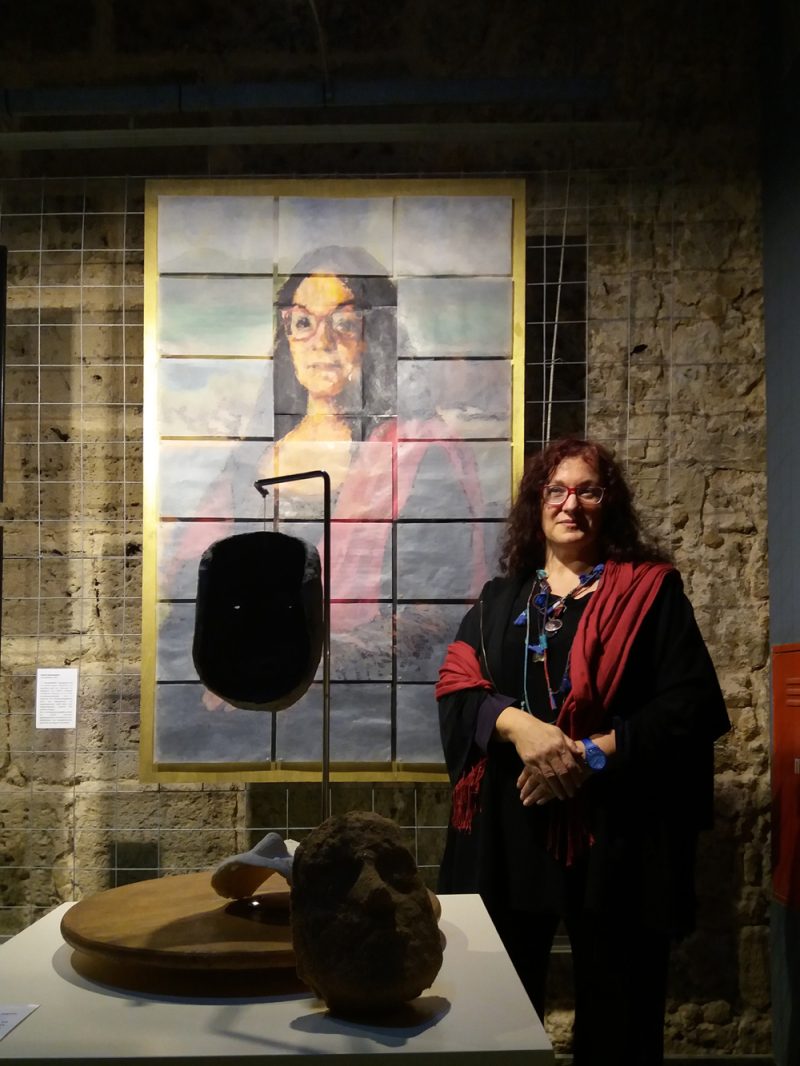
Materials: Scaled reproduction of “Mona Katerina,” interactive masks, assorted display elements
Dimensions: (to be provided)
Concise Description (Curator-friendly):
An interactive installation that allows viewers to don masks resembling the artist’s face, blurring the boundary between observer and observed. “Save As” asks participants to temporarily inhabit another’s identity, challenging assumptions about stability and authenticity.
References from Art History, Culture, etc.:
- Reinterpretation of the Mona Lisa
- Participatory art and mask traditions
Guiding Questions for Viewers:
- How does it feel to “try on” another’s image?
- Who decides what gets saved and what gets erased?
Symbolic Framework:
- 〄 Exile: the longing for (and alienation from) authentic selfhood
Personal Reflection:
This work transforms self-portraiture into a shared, performative act, inviting empathy as well as discomfort.

Dossier – Longing for Ascent
Title: Longing for Ascent
Year: 2023
Materials: Waxed paper, LED lighting (and other mixed media)
Dimensions: (to be provided)
Concise Description (Curator-friendly):
This illuminated sculpture utilizes light and translucent materials to evoke aspirations for transcendence amidst bodily reality. The work underscores the ongoing yearning to lift oneself above shame, situating that impulse within a larger cycle of descent and re-emergence.
References from Art History, Culture, etc.:
- Use of light as symbol of revelation and ascension
- Allusions to devotional objects and relics
Guiding Questions for Viewers:
- What weight do we carry in our longing to rise above ourselves?
- Can light expose and heal our internal wounds?
Symbolic Framework:
- Apollonian resilience, yet ultimately cyclical (no ascent without return)

Dossier – Iron Shame
Title: Iron Shame
Year: 2023
Materials: Mixed media sculpture with mask
Dimensions: (to be provided)
Concise Description (Curator-friendly):
A sculptural mask, echoing historic torture devices, explores the burden of public and private shame. “Iron Shame” literalizes the concept of emotional encumbrance, bearing witness to the self-effacing strategies that enable social survival at the price of authenticity.
References from Art History, Culture, etc.:
- Reference to the Iron Maiden and ritual masks
- Feminist sculpture traditions addressing the gaze and objectification
Guiding Questions for Viewers:
- How do the masks we wear both imprison and protect us?
- What is the cost of keeping shame hidden?
Symbolic Framework:
- ⧭ Decarnis: shame as weight, but also as material for transformation

Dossier – Menu of Shame (Catalog/Table Presentation)
Title: Menu of Shame
Year: 2023
Materials: Ceramic plates, sculptural forms (body parts/fluids), plasticized legend, table
Dimensions: Table display (size to be specified), plates as individual modules
Concise Description (Curator-friendly):
An installation composed of white ceramic plates, each bearing stylized bodily fragments or suggestions of fluid. The “Menu of Shame” juxtaposes sterile presentation with taboo subject matter, inviting viewers to confront and evaluate their own thresholds of discomfort, via interactive legend and QR-linked survey.
References from Art History, Culture, etc.:
- Playful allusion to still life and banquet paintings
- Reference to Aline Smithson’s investigations of bodily embarrassment
Guiding Questions for Viewers:
- Which “dishes” provoke your appetite—or aversion?
- How do rituals of serving and sharing both hide and reveal bodily truth?
Symbolic Framework:
- ʘ0 Partial Knowledge: surface appearances as sites of misunderstanding
Installation Context at Fundamental Fallacy (2023):
All works above were originally curated as an interconnected environment, allowing for individualized reflection and collective immersion. The modularity of the pieces supports solo or group exhibition, each work deepening the Decarnis Cycle’s central themes: the confrontation, composting, and re-embodiment of shame.
If you ## Dossier – Decarnis (Installation)
Title: Decarnis (Installation)
Year: 2017–2023
Type: Mixed Media Installation
Series: Decarnis Cycle
Constituent Works: Longing for Ascent, Menu of Shame, Iron Shame, Outcast
Dimensions: Variable (installation; see individual components)
Exhibitions:
- Solo show “Fundamental Fallacy”, 2023, Chania
Curator-Friendly Description:
A multidisciplinary installation weaving together layered meditations on shame, exposure, aspiration, and exile. Composed of four major works—Longing for Ascent, Menu of Shame, Iron Shame, and Outcast—the installation invites viewers to traverse a conceptual arc from internalized vulnerability (Outcast), through ritualized confrontation (Menu of Shame, Iron Shame), toward a paradoxical, luminous longing for transcendence (Longing for Ascent). Materials and participatory elements echo the cycle’s ongoing dialogue with classical imagery, contemporary identity, and performative ritual.
Theory-Rich Description:
Decarnis stages a choreographed encounter with the boundaries of ego and body. The viewer is implicated through both objecthood and participation, asked to inhabit the masks of shame, touch the symbolic “dishes” of aversion, and contemplate their own position as both observer and subject. The installation as a whole functions as a site of composting psychological and cultural taboos, drawing on mythic, feminist, and post-apollonian aesthetics.
Symbol Footnotes:
- ⧭ (Decarnis): Shame as embodied scar
- Ϟ (Disgust): Triggering of boundaries
- ↑ (Ascent): Unattainable spiritual ideal
- ╬ (Solidarity): Shared witnessing

Outcast / Παρίας
- Year: 2017
- Type: Painting (acrylic & oil pastel on wood)
- Dimensions: 55 x 45 cm
- Exhibited: The Diary of a Writer, group exhibition tribute to Dostoyevsky, 2017
Short Description:
Outcast presents a melancholic young woman seen through the slats of a shuttered window. Originally painted in homage to Dostoyevsky’s literary outcasts, the work now stands as a personal and universal meditation on shame, exclusion, and the quiet fear of social expulsion.
Long Description:
Painted during a period of introspective re-evaluation, Outcast captures the moment of withholding—of shrinking under the weight of others’ judgments. A young woman peers through a narrow window opening, her hand resting on her cheek in quiet surrender. Though originally linked to Dostoyevsky’s marginalized heroines, the image resonates more broadly as a portrait of self-imposed isolation: the internalized exile of those afraid to break social norms.
Recontextualized within the Decarnis Cycle, this work functions as a psychic prelude to later confrontational pieces. It offers the silent, withdrawn face that precedes action—a tender foil to the assertiveness of Iron Shame or the grotesque communion of Menu of Shame.
Its placement behind the figure of Iron Shame in the exhibition is intentional: the “Pariah” lurks behind the mask, animating it with lived vulnerability.
Theoretical Layer:
Outcast embodies the anticipatory tension of Decarnis (⧭)—shame before expression, fear before exposure. It channels the emotional residue of the Primal Fracture (¥), when one internalizes the risk of being cast out for their truth. The painted slats act both as shelter and as prison: a threshold the viewer must choose to cross or respect.
Symbolic Tags:
⧭ Decarnis — The quiet wound of shame before rebellion
¥ Primal Fracture — The origin of fear that silences expression
〄 Taboo Labyrinth — Cultural filters that conceal the animal self
╬ Solidarity — Offered retroactively: an invitation to re-enter
֏ Danger of Extinction — The warning implicit in unvoiced truths
 Katerina Tsebeli